The Difference Between Timing and Luck 🌟
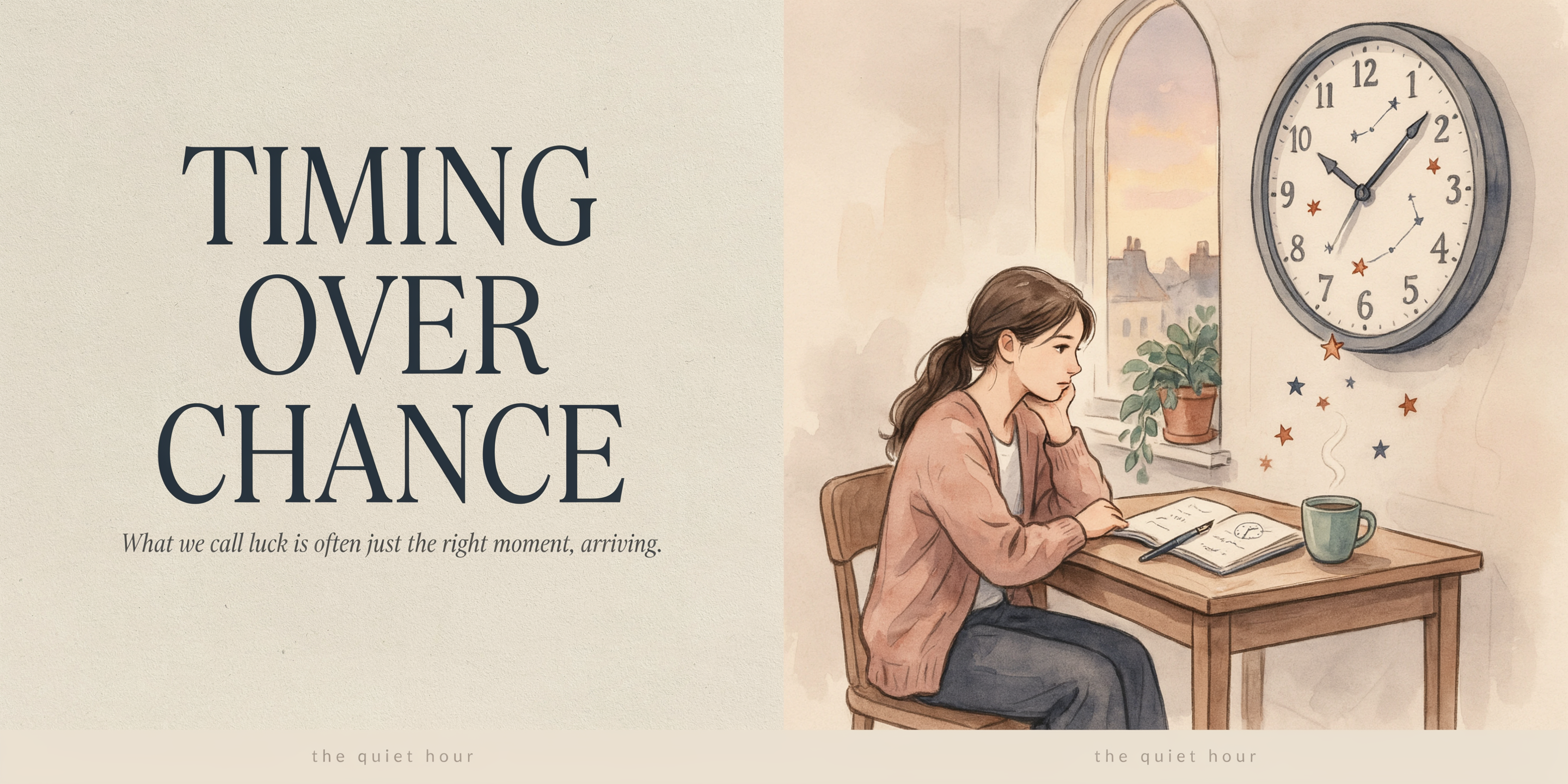
Many people describe successful periods as luck and difficult periods as bad luck. But when we look closely, timing often explains more than chance. Understanding the difference can help us make better decisions, recognize opportunities, and navigate life's changing phases with greater clarity.
✨ The Difference Between Timing and Luck
Have you ever noticed how some periods of life seem to flow naturally, while others feel like an uphill battle?
A project gains momentum. Opportunities appear unexpectedly. Conversations lead somewhere useful. Progress feels easier than usual.
Then, at other times, even your best efforts seem to produce limited results. Plans stall, energy feels lower, and progress comes more slowly.
Most people describe these experiences as luck and bad luck.
But what if timing explains more than chance?
🌊 Why We Often Mistake Timing for Luck
Luck is usually defined as something unexpected that happens in our favor. Yet when we look back at major life transitions, a different pattern often emerges.
Many opportunities appear during periods when we are more prepared, more aware, or moving through a phase that naturally supports growth and change.
This doesn't guarantee success. It simply means the conditions may be more favorable.
In the same way, difficult periods do not automatically mean failure. They may simply require patience, restructuring, learning, or preparation before the next phase begins.
📈 Life Moves Through Cycles
Throughout history, people have observed repeating cycles in nature, society, markets, and personal development.
Astrology became one of many systems designed to study these patterns.
Whether viewed symbolically or practically, the central idea remains consistent:
Different periods tend to favor different kinds of action.
Some phases encourage expansion and experimentation. Others encourage consolidation, reflection, and long-term planning.
Understanding which phase you're experiencing can provide valuable context for decision-making.
🪐 Timing Is Context, Not Destiny
One common misconception is that timing determines outcomes.
It doesn't.
Skill, effort, relationships, experience, and decision-making remain critically important.
What timing often changes is the amount of resistance we encounter.
- A supportive phase may create momentum and opportunity.
- A demanding phase may require greater discipline and patience.
- A transition phase may invite reassessment and change.
The same action can feel very different depending on the broader context surrounding it.
🎯 Recognizing Opportunity More Clearly
When people experience a fortunate turn of events, they often focus on the outcome.
Timing awareness encourages us to look deeper.
Questions such as these can be more useful:
- What conditions made this opportunity possible?
- Was I better prepared than before?
- What phase was I moving through at the time?
- How can I recognize similar patterns in the future?
These questions transform "luck" from something mysterious into something we can learn from.
📝 Building Your Own Timing Awareness
You don't need to predict the future to benefit from observing patterns.
Start by reflecting on previous periods of your life:
- When did progress feel easiest?
- When did you face the greatest resistance?
- What important decisions worked well?
- What lessons emerged from difficult phases?
Over time, recurring themes often become visible. These patterns can provide valuable insight into how you respond to different life phases.
🌟 Final Thoughts
The difference between timing and luck is subtle but important.
Luck suggests random chance. Timing suggests context.
Neither guarantees success, and neither removes personal responsibility. However, understanding timing can help us make more informed decisions, set realistic expectations, and navigate change with greater confidence.
Sometimes what appears to be luck is simply a moment when preparation, opportunity, and timing happen to meet.
The goal is not to predict every outcome. The goal is to better understand the phase you're in and make the most of it.
Share this article
Try the system
Where are you in your life timing?
Generate a structured reading of your current phase — based on long-studied life cycles.
Explore Your Life Timing →